When to scale your agent setup: the team signals that actually matter
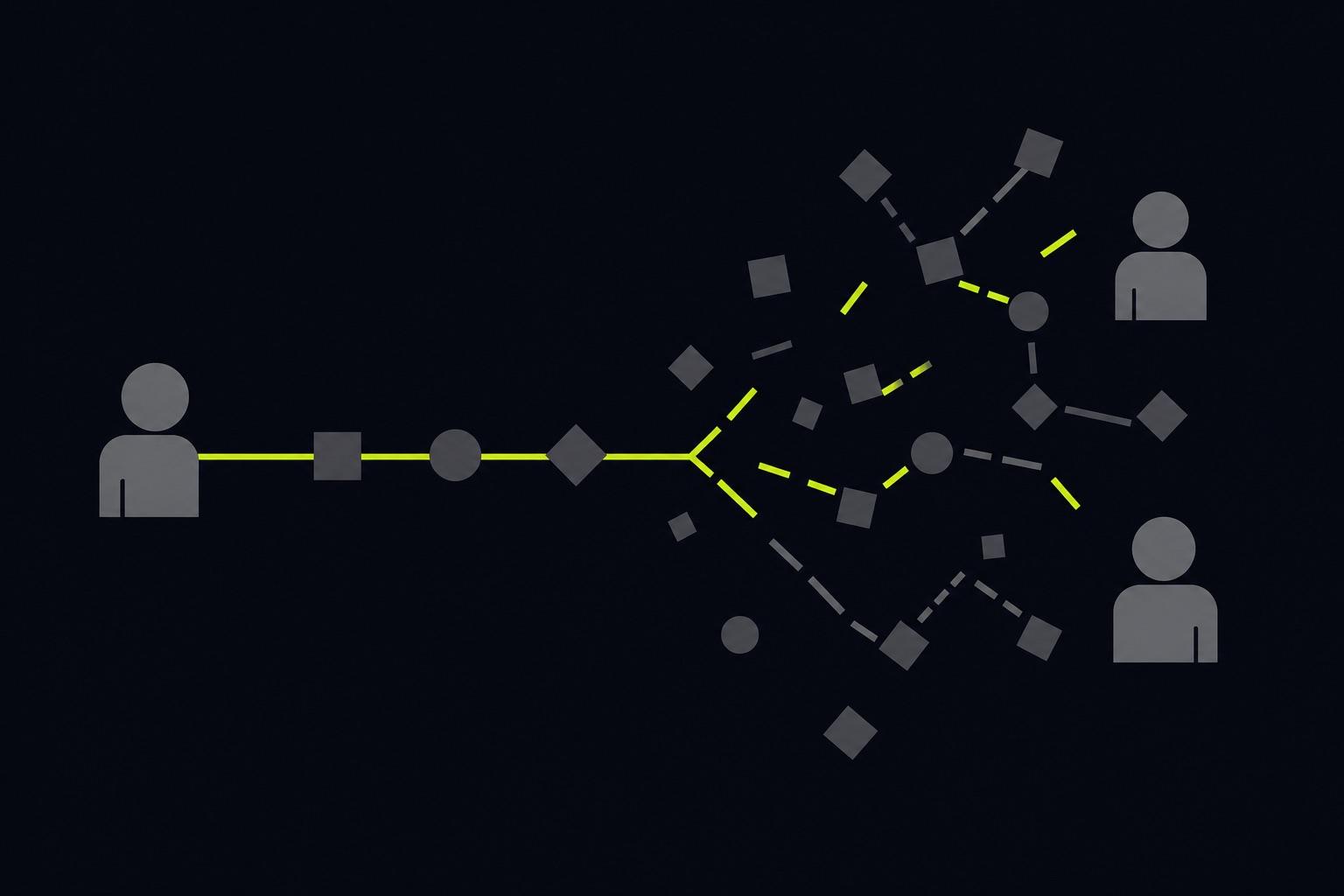
Most teams scale their AI coding agents right after the demo works, which is the wrong moment. The signal to scale isn't enthusiasm. It's that the constraints keeping solo agent use safe have started to break across the team.
tsukumo
Short version: most teams scale their AI coding agent setup at the wrong moment. The trigger is usually a good demo, one developer who got an agent to do something impressive and now wants everyone on it. That enthusiasm is not a readiness signal. The real signal is duller and more reliable: the informal habits that keep one person's agent use safe have started to break now that a second and third person depend on them. Scale to that, not to the demo. We have built and run agent fleets in production, and the teams that scale well are the ones that wait for the friction, then move fast.
What does "scaling your agent setup" actually mean?#
It is worth being precise, because "scale" gets used to mean two different things.
It does not mean "more developers using agents." That is just adoption, and adoption multiplies whatever setup you already have, good or bad. If one person's workflow is held together by habit and memory, ten people using the same workflow gives you ten times the drift.
Scaling means adding the layers that were optional for one person and become load-bearing for a team:
a shared source of truth, so agents stop re-deriving the same project context from scratch every session
orchestration, so work is divided across agents instead of duplicated
observability, so you can see what the agents actually did, beyond the final diff
governance, so the irreversible actions pause for a human and the rest run free
One developer can hold all of this in their head. A team cannot. Scaling the setup is the act of moving it out of one person's head and into shared infrastructure.
Why is "the demo worked" the wrong signal to scale?#
Because a demo proves capability, and capability was never the thing that breaks at team size.
When a single strong developer gets an agent to ship a feature, what you are seeing is that person's judgment compensating for everything the setup lacks. They know which context to paste, they notice when the agent drifts, they catch the bad change in review because they wrote the prompt and remember the intent. None of that survives contact with a second developer who did not build that intuition.
So the demo tells you the model is good enough. It tells you nothing about whether your team is ready to run it. Those are different questions, and only the second one decides whether scaling helps or just spreads the mess wider.
These are the signals worth scaling to. They are operational and repeated, which is exactly why they are trustworthy.
Signal
What you observe
Why it means "scale now"
Context re-explained
Every developer pastes the same architecture notes into every session
The context belongs in a shared source of truth, not in each person's clipboard
Output drift
Two developers' agents solve the same problem in incompatible ways
There is no canonical answer for the agents to converge on
Review bottleneck
Agents produce changes faster than humans can review them
You need division of work and visibility, not more reviewers
Onboarding lag
A new hire cannot get an agent to be useful for days
The setup lives in tenured developers' heads, not in the system
Blind spots
Nobody can answer "what did the agents do last night?"
You are running production work you cannot see, which is a governance problem waiting to happen
You do not need all five. Two or three showing up repeatedly is the moment. The common thread is that each one is a coordination cost, not a capability cost. The agents work. What is failing is the absence of shared structure around them.
Where does your team actually stand on this? A short agent-ops assessment is the low-risk way to find out.
The failure of scaling too early is quiet, which is what makes it expensive.
You build orchestration before there is enough work to orchestrate. You stand up dashboards nobody reads because two people could just ask each other. The tooling starts to attract more care than the product, and adoption gets mandated from above instead of pulled from below. Mandated adoption is its own tell: if people had hit the friction, you would not have to push.
None of this is catastrophic. That is the trap. It is a slow tax on attention, paid to coordinate work that did not yet need coordinating, and it makes the whole idea of agents look heavier than it is.
The late failure is louder and more familiar. The signals were all there, and the team absorbed them as individual heroics instead of fixing the system.
Developers keep re-explaining context by hand. Drift becomes the normal state of the codebase, and someone spends their week reconciling two agents' takes on the same module. Review backs up. The new hire stays slow. And the first time an agent does something irreversible that nobody saw, the conversation stops being about productivity and starts being about trust. Late scaling means you paid the full cost of the friction and got none of the upside, for months.
Between too early and too late, the window is wide and the signals are clear. The mistake is almost never timing the window wrong by a week. It is reading the wrong signal entirely: scaling to enthusiasm, or refusing to scale until something breaks in public.
When the signals are real, scaling is concrete work, not a tooling shopping trip. The four layers above are the work:
A shared source of truth. One canonical, current answer per question, so agents stop rereading stale docs and converge instead of drift. Read more in managing context for AI coding agents.
Orchestration. Dividing work across agents with persistent state, so they collaborate instead of duplicate. See orchestrating AI coding agent fleets.
Observability. A record of what every agent did, so review and debugging have something to look at. See AI agent observability.
Most teams have none of these on day one and do not need them. The skill is knowing which signal turns each from optional to required, and building it the week it does, not the quarter before or after.
If your developers already trust agents for real work and the thing slowing you down is duplication, drift, and a lack of visibility, you are past the demo and into the part that matters. That is the readiness signal, and it is a good problem to have. The work from here is ordinary engineering: shared context, orchestration, observability, governance, built in the order the signals demand.
We do this with teams that have hit exactly these signals, starting from where they actually are instead of a clean slate. If you are trying to read your own signals and decide what to build first, an engineering assessment is where we start.
We start from where your team actually is and tell you which layer to build first.
When is the right time to scale AI coding agents across a team?
When the friction of not scaling shows up in specific, repeated ways: the same project context is re-explained in every session, output drifts because there is no shared source of truth, review becomes the bottleneck, and you cannot see what the agents did. One developer being productive is not the signal. The signal is that the informal habits keeping one person safe stop working once a second and third person rely on them.
What are the signs we scaled our agent setup too early?
You built orchestration and dashboards before anyone needed them, the tooling gets more attention than the work, and adoption is mandated rather than pulled. Scaling too early means paying for coordination you do not yet have to coordinate. The cost is real but quiet: time spent maintaining a fleet that two people would have run fine without.
Do we need new tools to scale agents, or just more usage?
Usage alone does not scale; it multiplies the same problems by the number of developers. Scaling means adding the layers that were optional for one person and required for a team: a shared source of truth so agents stop re-reading the same docs, orchestration so work is divided not duplicated, observability so you can see what ran, and governance so nothing irreversible happens unseen.
How do we know if our team is ready to run an agent fleet?
You are ready when individual agent use is already working and the limits you hit are coordination limits, not capability limits. If your developers trust agents for real work and the thing slowing you down is duplication, drift, and lack of visibility, the fleet is the answer. If they still do not trust the output of one agent, a fleet will only scale the distrust.