AI agent observability: knowing what your agents did, and why
Your agents ran overnight. This morning there are merged changes, a token bill, and something that looks off. Can you reconstruct what they did and why? That question is what agent observability answers, and your existing dashboards don't.
tsukumo
The short answer
Agent observability is being able to answer, after the fact, what an AI agent did and why. It records the decisions an agent made, every action it took (tool calls, edits, commands, and their results), what each step cost, and whether the work passed your gates. App monitoring doesn't cover this: it watches a service's health, not a non-deterministic actor's behavior. Without agent observability you're running agents on faith, and the first thing you can't explain ends the rollout.
Short version: an agent ran while you slept. This morning there are merged changes, a token bill bigger than you expected, and a test that's suddenly red. What did it actually do, and why? If you can't answer that from a record, you're running agents on faith. Agent observability is the ability to reconstruct an agent's behavior after the fact, the decisions, the actions, the cost, the outcome, and it's a different thing from the monitoring you already have.
Picture the normal case for agents in production: work happens when you're not watching. A fleet runs overnight, a task kicks off while you're in a meeting, an agent fixes something at 3am. By the time you look, the work is done. The only question that matters is whether you can tell what happened.
Your existing stack mostly can't. APM, logs, traces, the dashboards your team already runs, all of it was built to watch a service: is it up, how fast, how many errors. That tells you the app's health. It says nothing about what a non-deterministic actor decided to do inside it. An agent that confidently does the wrong thing can leave every system-health metric green.
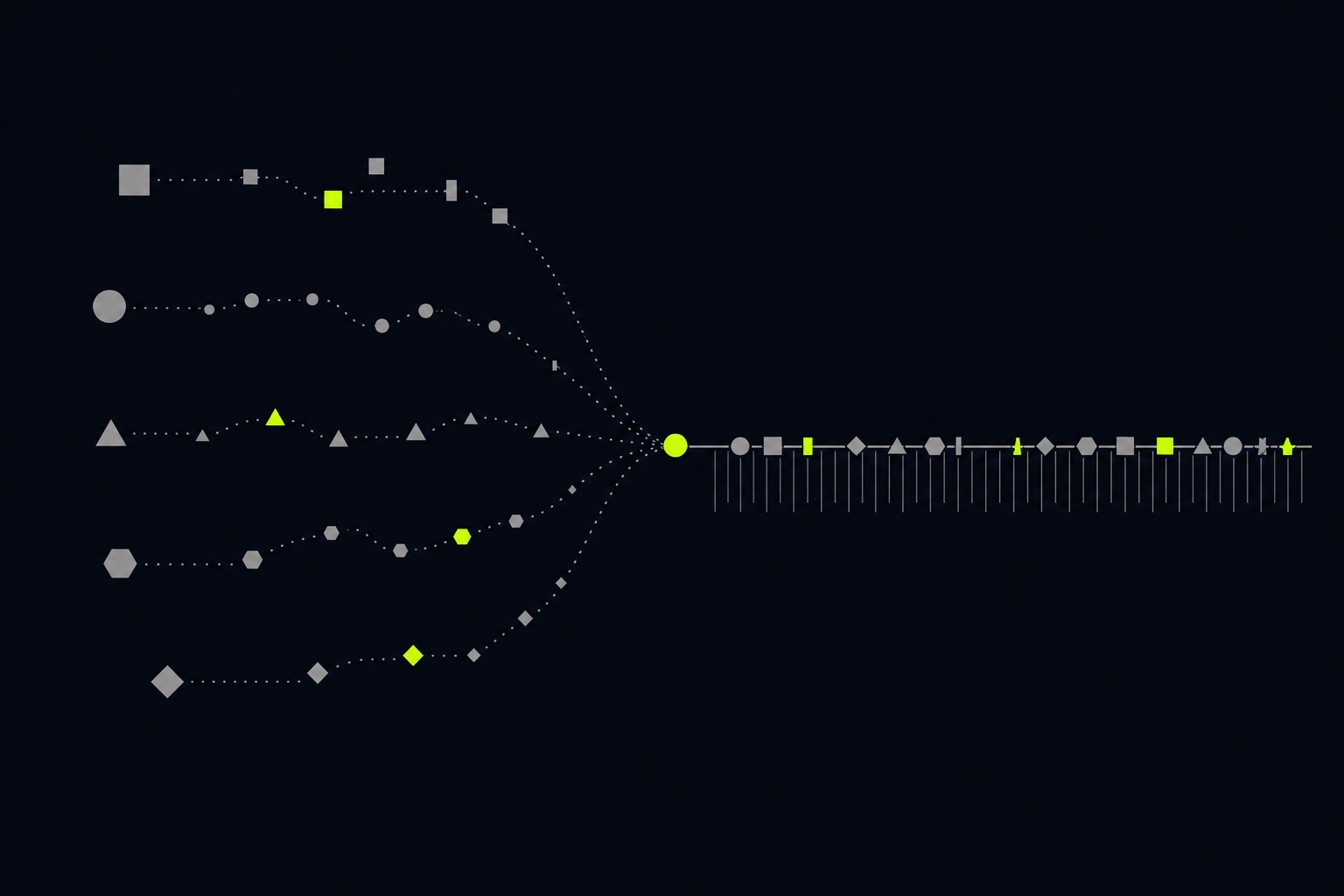
Here's the mental shift. A service is deterministic: same input, same output, and you monitor it for deviation. An agent isn't. It reads context, makes a judgment, takes actions, and the same prompt can go two different ways. You're not monitoring a system anymore. You're recording an actor's work, the way you'd want a record of what any powerful automated account did with its access.
That changes what's worth capturing. Latency and error rates still matter, but they're not the point. The point is behavior: what the agent chose, what it touched, and what it cost to get there.
Service monitoring vs agent observability
What it answers
Service monitoring
Agent observability
Subject
A deterministic service
A non-deterministic actor
Core question
Is the app up and fast?
What did the agent do and why?
Captures decisions
no
yes
Captures every action and result
no
yes
Attributes cost per step
no
yes
Survives for a later audit
rarely
by design
Where does your team actually stand on this? A short agent-ops assessment is the low-risk way to find out.
Four things, and most monitoring captures none of them:
The decision trail. Why the agent did what it did, the reasoning and the context it acted on. When a change looks wrong, this is what tells you whether the agent was misled or just careless.
The action log. Every tool call, file edit, and command the agent ran, with its result. This is the diff of reality, what the agent actually did rather than what it reported it would.
Cost per step and per run. Where the tokens went, attributed to the work, so a runaway loop or a bloated context shows up as a line you can find instead of a surprise on the bill. It's the same visibility that makes agent cost controllable.
The outcome against your gates. Did the change pass CI, review, and your checks, or get caught, and where. The record of whether the work was actually good.
Capture those durably enough to reconstruct a run weeks later, beyond watching it live, and you can answer the 3am question. Miss them and agents are a black box you're trusting with commit access.
Observability isn't an add-on for later. The other parts depend on it. You can't make agents reliable if you can't see where they fail. You can't govern an actor whose actions you can't audit. You can't control cost you can't attribute. Every one of those depends on a record, and the record is observability.
One agent, you can babysit. You watch the terminal, you eyeball the diff, you catch the weird move. That doesn't scale past about one. A fleet running in parallel, overnight, on different parts of the codebase, is exactly the setup where a human can't be watching, and exactly where you most need to know what happened. The move from one agent to a fleet is the move from watching to recording, and teams that skip it hit a wall the first time something goes wrong at scale.
We run agent fleets in production to ship our own software, which means we live the 3am question ourselves. We built yoru, our observability layer, because operating agents without it isn't operating, it's hoping. When we transition a client team to running agents in production, that visibility comes with the operating model, fitted to your stack, so your developers can say exactly what their agents did and why, every morning. If you're putting agents to work and can't yet answer that question, that's the gap to close. Talk to us about your team.
It's the ability to reconstruct what an agent did and why: the decisions it made, the actions it took and their results, the cost of each step, and whether the output passed your checks. The test is whether you could explain a specific agent change weeks later, for an incident or an audit.
Isn't my existing monitoring enough for AI agents?
No. APM and logs were built for deterministic services and report on system health. An agent is a non-deterministic actor that makes decisions and writes code. Your dashboards show whether the app is up, not what the agent chose to do or why, which is the part you need.
What should agent observability capture?
The decision trail (why the agent did what it did), the action log (every tool call, edit, and command plus its result), cost per step and per run, and the outcome against your gates. Enough to reconstruct a run later, beyond a live dashboard that scrolls away.
Why do I need observability before running agent fleets?
One agent you can watch by hand. A fleet you cannot. When several agents work in parallel overnight, the only way to know what happened, what it cost, and what went wrong is a durable record. Without it, scale turns small mistakes into unexplained incidents.