contact

16 June 2026

What agentic operators actually do (the operator, not the copilot)

An agentic operator runs AI agents that do whole units of work, instead of typing every line. Here's what the role looks like day to day.

tsukumo

Short version: an agentic operator is a developer who runs AI agents that do whole units of work, rather than typing every line. They scope a task, set goals and guardrails, let the agent plan, edit across files, run tests, and fix, then review the result at the right altitude and step in when it goes wrong. At fleet scale they run several agents at once, like a senior engineer running a team.

If you've read the copilot-operator gap, this is the other side of it: not why seats aren't enough, but what the job actually looks like once a developer crosses over.

A day in the life: how the work flows

The work runs in a loop, and the operator owns the start and the end of it.

  1. Scope. The operator turns a ticket into something an agent can actually do: clear goal, the relevant context, the constraints that matter. Bad scoping is the most common reason an agent fails, and it's the operator's job, not the agent's.
  2. Set guardrails. What the agent may touch, what it must not, which checks have to pass. Guardrails are how you let an agent move fast without it doing something you can't undo.
  3. Let it run. The agent plans, edits across many files, runs the tests, reads the failures, and fixes. The operator isn't watching every keystroke; they're letting the work happen.
  4. Review at altitude. The operator reads the diff and the test output critically, at the level of "is this correct and does it fit," not by re-typing it. This is the skill that's genuinely new.
  5. Intervene. When the agent is confidently wrong, stuck, or out of scope, the operator steps in, corrects, and sends it back. Knowing when to do this is most of the craft.

Operating one agent versus a fleet

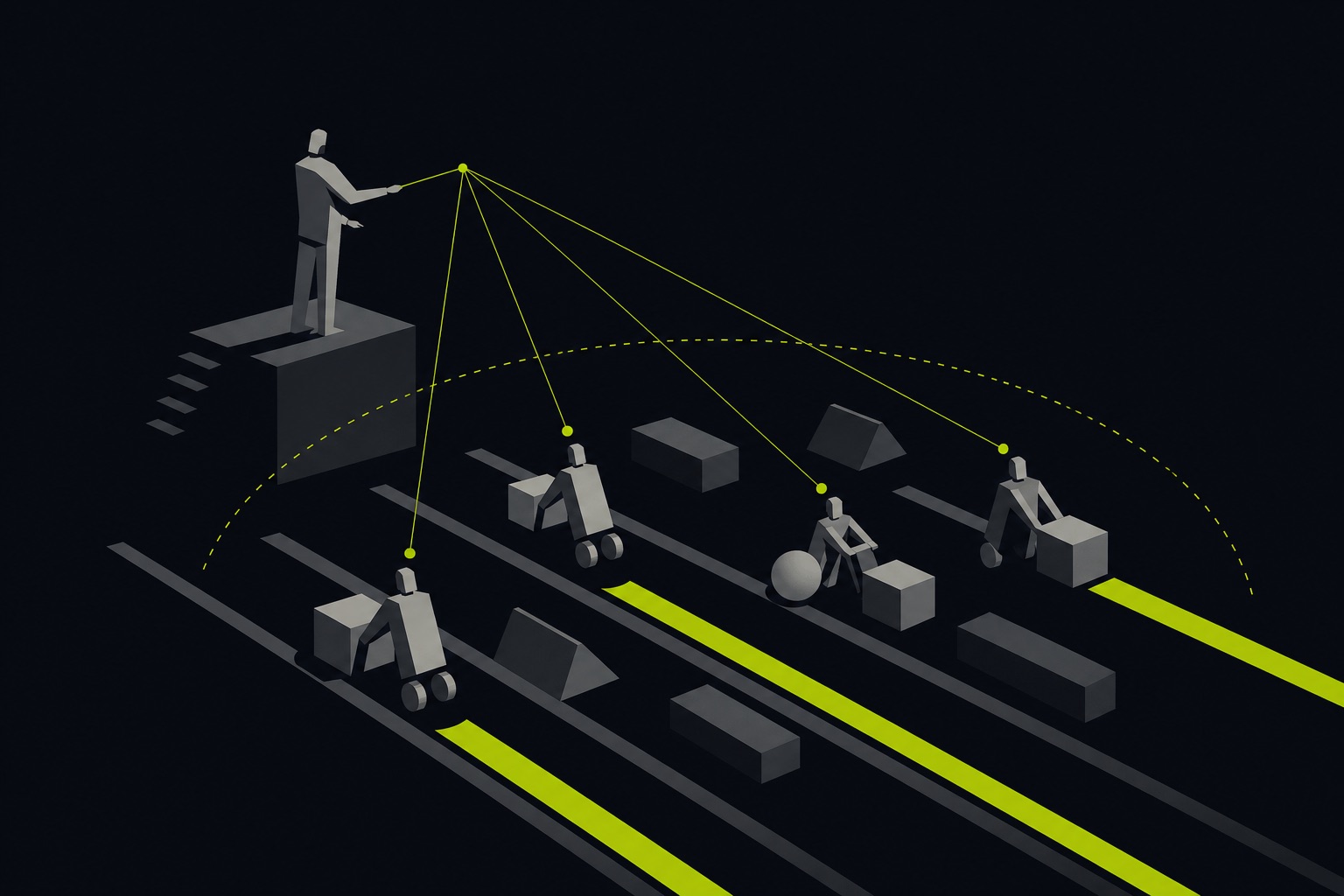
One agent is a faster way to do a task. A fleet is a different job. The operator now has several agents working in parallel on different parts of the codebase, and the work becomes coordination: who owns what, in what order, how the pieces merge, what happens when two agents disagree. That's where the order-of-magnitude change comes from, and it's why a fleet needs orchestration and observability under it, not just a better prompt.

The skill that's actually new

Most of what an operator does, scoping, reviewing, deciding when to trust, is judgment good engineers already have. The genuinely new muscle is reviewing at the right altitude: resisting the urge to re-do the work by hand, while still catching the confident-wrong output before it ships. Teams that don't build this muscle either rubber-stamp bad diffs or babysit every step, and both kill the gains.

Why this isn't just "prompting"

Prompting is a small part of it. The operator's value is in the loop around the agent: framing the work, holding the standards, reading the result, and owning the outcome. That's why operating is taught on real work, not learned from a cheatsheet, and why it doesn't get automated away by the next model.

How tsukumo does it

We run agent fleets in production to ship our own software, so we operate this way every day. When we work with your team, we train your developers to operate, on your codebase and standards, and leave the capability with them. Augment, never replace; your devs become the operators.

If your team has agents but is still typing every line, that's the gap we cross. Talk to us about your team.

Common questions

What does an AI agent operator actually do day to day?
They scope work for agents, set goals and guardrails, and then direct rather than type: the agent plans, edits across files, runs the tests, and fixes; the operator reviews the diff and the test output, steers, and intervenes when the agent goes off track. Across a fleet, they keep several of these running in parallel.
How is an operator different from someone using a copilot?
A copilot finishes the line you're typing; your hands stay on every step. An operator hands a whole task to an agent and supervises the result. The copilot is a faster keyboard; the operator runs a worker. That's a change in role, not just in tooling.
Do you need to be a senior engineer to operate agents?
It helps, because the core skill is judgment: knowing what good output looks like, reviewing at the right altitude, and recognizing when an agent is confidently wrong. Strong engineers pick it up fastest, but it's a learnable skill, not a title.
What skills does operating agent fleets require?
Scoping work so an agent can succeed, setting guardrails that hold, reviewing output critically without re-doing it line by line, and coordinating several agents without collisions. Plus the honesty to step in when the agent is wrong instead of trusting it blindly.

Read next

Want this running on your team?