The canonical-doc layer the 7 agent-memory types miss
The 7 types of agent memory making the rounds this week are all recall: read paths that retrieve a guess from the past. None is a canonical source of truth your fleet writes back to. Here is the missing layer, with the token math.
tsukumo
Short version: the 7 types of agent memory everyone is sharing this week are a clean taxonomy, and they are all the same kind of thing. They are recall. Each one is a read path: the agent reaches into a store and pulls back a guess about what was current at some point in the past. None of them is the layer a team actually maintains, one current answer the whole fleet writes back to and rereads. That missing layer has a name. It is canonical context, and it is what your token bill is quietly paying for the absence of.
“The 7 types of agent memory: working, semantic, episodic, procedural, retrieval, parametric, and prospective. A clean taxonomy of how agents store and recall state.”
They are all recall. Every one of them is a read path.
Look at what each one does. It reads. Working memory reads the window. Semantic and episodic read a store of what the agent learned before. Retrieval reads a vector index. Parametric reads the weights. Even prospective memory reads back an intention the agent filed earlier. In every case a single agent reaches into its own store and answers from a guess about what was true when that store was written. That is the right model for some questions. "What did the user ask three turns ago" is a recall question, and episodic memory answers it well.
But there is a question none of them answers: what is current, right now, across the whole fleet? No private store knows that. By construction, each one holds what a single agent put there.
“Every type of agent memory on the list is recall. None is a canonical answer your fleet writes back to. That is the gap.”
Because every agent re-derives "which doc is current" from scratch, and they drift.
Run one agent and recall is fine. Run a fleet, several agents plus the humans on the team, and the cracks show. Agent A reads the repo, ranks five candidate docs, picks one, answers. Agent B does the same an hour later and ranks them differently. Now you have two agents, two answers, and no freshness signal to say which doc is the current one. Nobody wrote the answer down anywhere the others could read it.
The cost lands twice.
First, tokens. Every agent rereads the repo every session to re-rank the same candidates, because nothing remembers which one won last time. Multiply that by every agent, every session, every teammate. You are paying, repeatedly, to re-derive an answer your fleet already found.
Second, wrong-but-confident answers from stale context. An agent retrieves a doc that was current in March, has no marker telling it the doc went stale in May, and answers with full confidence. Recall has no notion of freshness. It returns what it found, not what is true now.
Here are the two definitions this whole argument rests on.
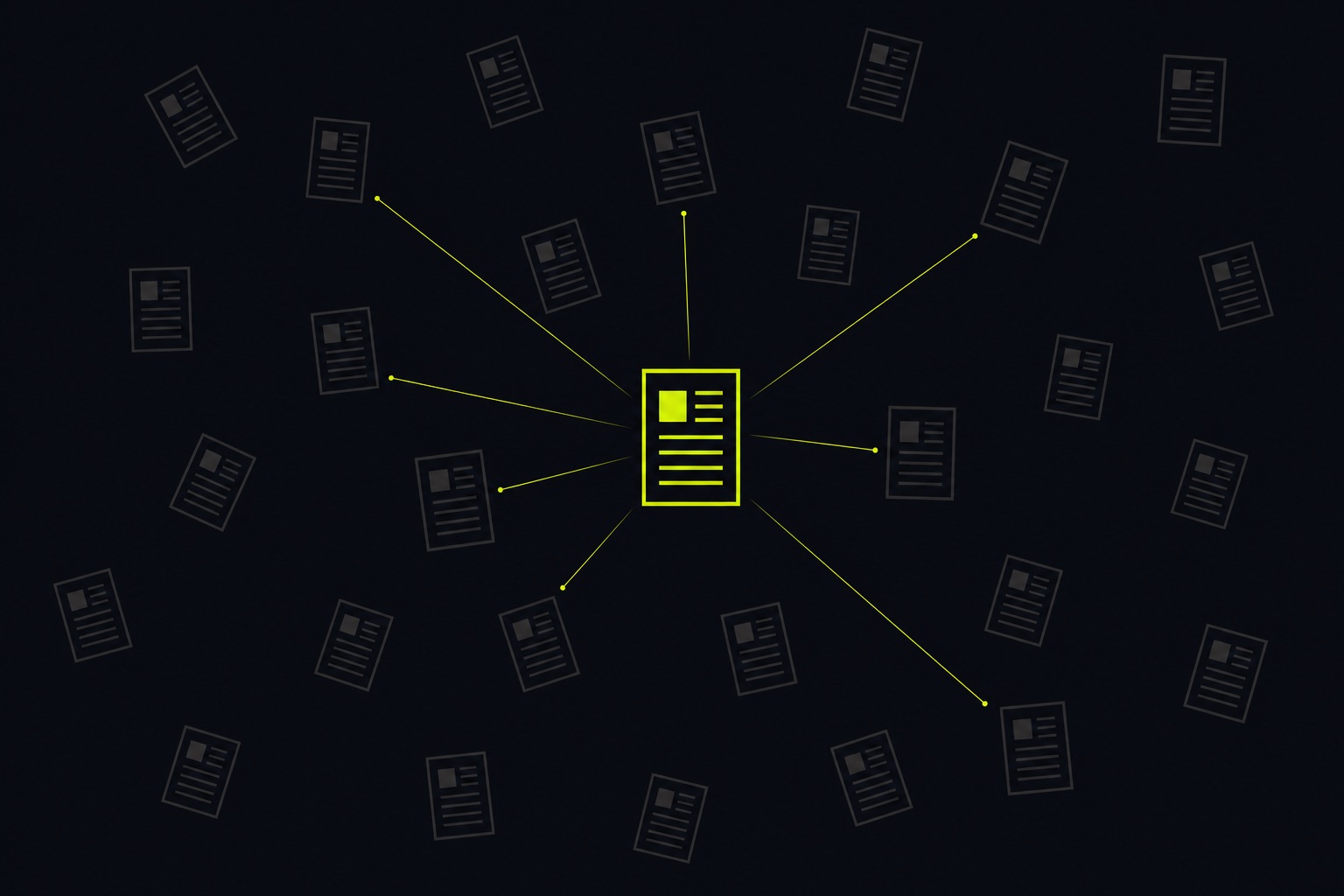
Canonical context is the single current doc that answers a question, marked as the authoritative one, returned as a path:line pointer with a freshness marker: canonical, stale, or duplicate. Not five candidates to re-rank. One answer, current.
A write-back layer is the path by which an agent records what it learned into that shared source of truth, so the next agent and the next teammate read the updated answer instead of re-deriving it. Recall is read-only. Write-back keeps the canonical answer current as work happens.
Put together: a layer that returns one current answer, and that agents write back through a single shared point, so the whole fleet reads the same source of truth instead of each re-ranking the repo alone. We built one. It is called trovex, it is open source, and it sits next to the recall stores rather than replacing them.
Where does the recall-vs-canonical line actually fall?#
Recall store vs canonical layer
Question
Recall store
Canonical layer
What it answers
What was true in the past
What is true now
What it returns
Several candidates to re-rank
One current doc as path:line
Freshness
No signal
canonical / stale / duplicate
Across the fleet
Each agent re-derives alone
One answer the fleet shares
On new knowledge
Read-only
Agents write back through one point
This is the same axis we draw in vector DB vs canonical retrieval: a vector store retrieves plausible candidates, a canonical layer resolves them to the current one. Recall and canonical are not competitors. They answer different questions.
A claim about tokens should come with a receipt. Here is ours, measured on our own repo, not offered as a universal guarantee.
~60%
fewer tokens per doc lookup
Conservative first-party number, measured on the trovex repo
Source: trovex benchmarks
The conservative public number is about 60% fewer tokens per doc lookup. That is the figure we are comfortable putting our name on. The benchmark behind it is more specific.
One worked example beats a paragraph of claims. The mechanism is simple. When the answer to "which doc is current" is already written down as a pointer, the agent stops paying to rederive it.
It does not replace the 7 types. This is the honest part, and it earns the rest.
Episodic recall still matters. Semantic memory still matters. Your agents still need to remember past interactions and known facts, and the taxonomy MarkTechPost laid out is the right way to think about those. A canonical layer is not a memory system. It is the one piece that taxonomy assumes and does not provide: the write-back source of truth that turns a pile of recall stores into a fleet that agrees on what is current.
Recall tells you what happened. Canonical context tells you what is true now. You want both.
We did not set out to add an eighth type of memory. We set out to stop paying, over and over, to re-derive an answer the fleet had already found. The fix was not a bigger store or a better re-ranker. It was a write-back point: one place the current answer lives, with a freshness marker, that every agent reads from and writes to. The recall types are still doing their jobs underneath. This is the layer that makes them agree.
trovex is open source and in public beta. Clone it, point it at your repo, and run the benchmark yourself. If you are rolling agents out across a fleet and the token bill or the disagreement is starting to hurt, that is the work we do.
We will map where your agents re-derive instead of reread, and where a canonical layer pays for itself.
A canonical, write-back source of truth. The 7 types of agent memory are all recall: each is a read path that retrieves a guess about what was current in the past. None gives your fleet one current answer it maintains. The missing layer returns the single doc that answers a question as a path:line pointer with a freshness marker, and lets agents write what they learn back through one shared point.
What is a source of truth for AI agents?
One current, canonical answer the whole fleet reads from and writes back to, instead of each agent re-deriving "which doc is current" from a recall store every session. A source of truth marks a doc canonical, stale, or duplicate, points to it as path:line, and updates when an agent learns something new. Recall stores retrieve candidates. A source of truth resolves them to one.
What is canonical context?
Canonical context is the single current doc that answers a question, marked as the authoritative one and returned as a path:line pointer with a freshness signal (canonical, stale, or duplicate). It is the opposite of retrieving five plausible candidates and re-ranking them. One answer, current, that the fleet shares rather than each agent re-ranking on its own.
What is a write-back memory layer?
A write-back layer is the path by which an agent records what it learned into the shared source of truth, so the next agent and the next teammate read the updated answer instead of re-deriving it. Most agent memory is read-only recall: it retrieves the past but never updates the present. Write-back keeps the canonical answer current as work happens.
Does a canonical layer replace the 7 types of agent memory?
No. Episodic, semantic, and the other recall types still matter. A canonical layer does not replace them. It is the write-back source of truth those types assume but do not provide: the one current answer your fleet maintains. Recall tells you what happened before. Canonical context tells you what is true now.